
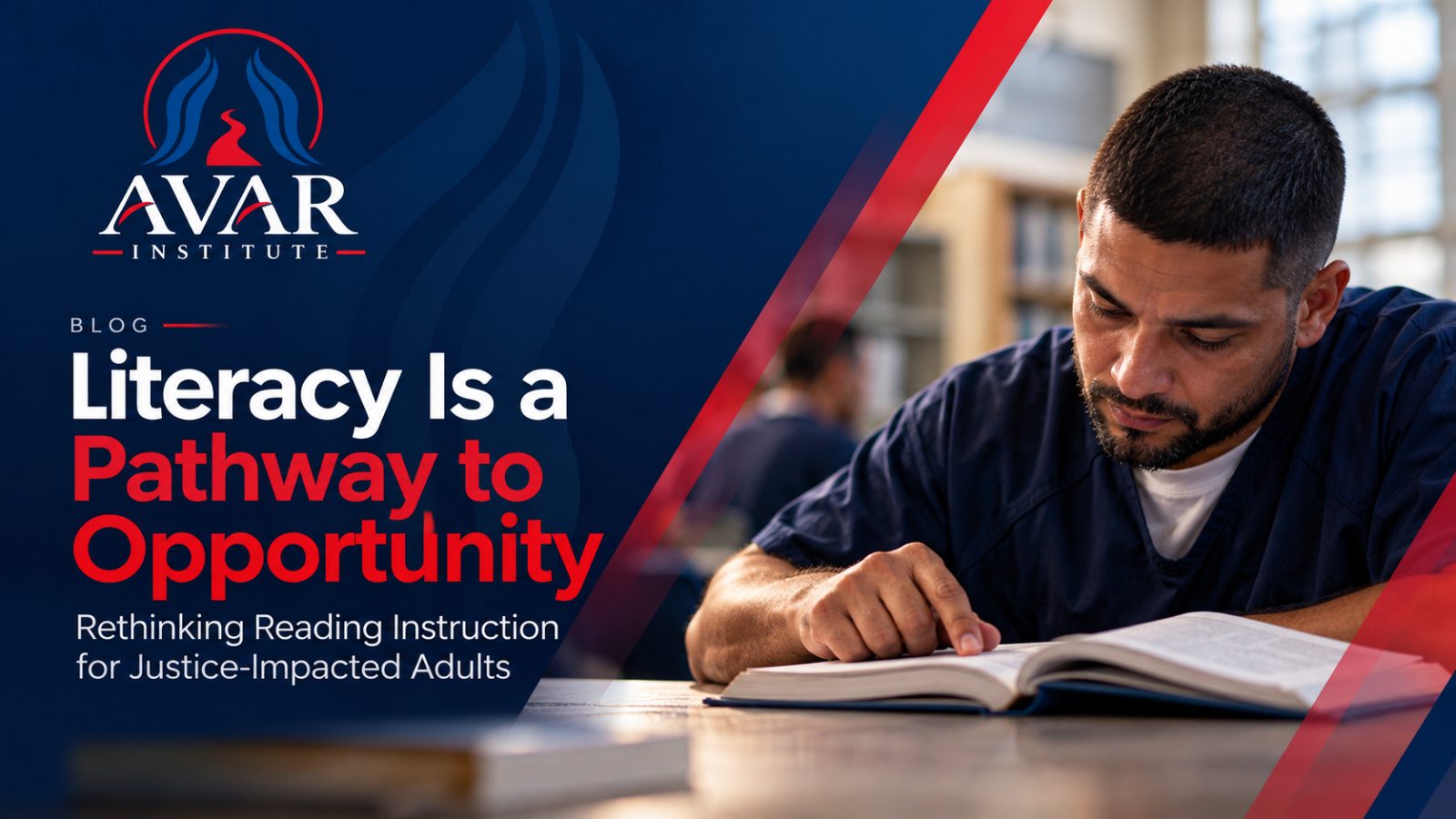
Literacy Is a Pathway to Opportunity: Rethinking Reading Instruction for Justice-Impacted Adults
For individuals navigating incarceration, reentry, or the challenges of rebuilding their lives, literacy is more than an academic skill. It is a foundation for independence, employment, lifelong learning, and meaningful participation in society.
Yet, for many justice-impacted adults, the opportunity to develop strong reading skills has been limited by educational gaps, interrupted schooling, learning difficulties, or instructional approaches that did not meet their needs.
At Avar Institute, we believe that literacy instruction should be grounded in evidence, designed with dignity, and accessible to every learner—regardless of age, background, or circumstance.
The question is not whether adults can become stronger readers. It is whether we are providing the instruction and opportunities they need to succeed.
The Literacy Challenge in Correctional and Reentry Education
Reading affects nearly every aspect of daily life.
From completing a job application and understanding workplace safety instructions to navigating healthcare information and pursuing additional education, literacy is essential.
For justice-impacted adults, the consequences of limited reading proficiency can be particularly significant.
Many workforce training programs, educational pathways, and employment opportunities assume that participants already possess foundational reading skills. But when those skills are missing, even a motivated learner may struggle to complete training or demonstrate their abilities.
Traditional adult education approaches often emphasize reading comprehension, vocabulary, and functional literacy. While these are important, they may not adequately address underlying difficulties with recognizing words, decoding unfamiliar text, or reading fluently.
When learners struggle with foundational reading skills, simply providing more difficult texts or additional comprehension exercises may not resolve the problem.
We need to examine how reading develops—and how instruction can support that development.
What the Science of Reading Teaches Us
The Science of Reading is a body of interdisciplinary research examining how people learn to read, why some individuals experience difficulties, and which instructional practices support reading development.
This research draws from cognitive psychology, neuroscience, linguistics, and education.
An important insight is that skilled reading involves the development and integration of multiple abilities, including:
Phonemic awareness: recognizing and manipulating individual sounds in spoken words.
Phonics and decoding: understanding relationships between letters and sounds to read unfamiliar words.
Fluency: reading accurately and efficiently.
Vocabulary: understanding the meanings of words.
Language comprehension: constructing meaning from spoken and written language.
Although foundational reading instruction is commonly associated with elementary education, the underlying processes remain relevant for older learners who have not developed automatic word recognition or fluent reading.
Adults who struggle to read do not need instruction that treats them like children. They need age-respectful instruction that addresses their actual learning needs.
For correctional education and reentry programs, this distinction is critical.
Why Adult Literacy Instruction Must Be Different
Effective instruction for justice-impacted adults should recognize both their life experiences and their educational needs.
A learner may have extensive workplace knowledge, strong verbal communication skills, and considerable practical experience while still struggling to decode unfamiliar words.
That learner does not lack intelligence or potential.
They may simply have foundational skill gaps that previous educational experiences failed to address.
An effective adult literacy program should therefore incorporate three essential principles.
1. Start with What the Learner Knows
Instruction should begin with meaningful assessment.
Rather than making assumptions based on age, educational attainment, or previous academic performance, educators should identify specific reading strengths and needs.
Assessment can guide targeted instruction and help learners experience measurable progress.
2. Provide Explicit, Systematic Instruction
Foundational reading skills should be taught through intentional, carefully sequenced instruction.
Learners benefit from clear explanations, guided practice, feedback, and opportunities to apply new skills.
Instruction should build progressively while allowing flexibility for individual learning needs.
3. Preserve Adult Dignity and Relevance
Educational materials should reflect adult interests, experiences, responsibilities, and goals.
Reading passages, instructional examples, and learning activities should be appropriate for adult learners without sacrificing instructional rigor.
A reading lesson can strengthen decoding skills while using themes relevant to employment, personal growth, family relationships, or community participation.
Academic effectiveness and adult dignity should never be competing priorities.
Building a Stronger Foundation for Second Chances
Literacy alone cannot eliminate the complex challenges associated with incarceration and reentry. Employment barriers, housing instability, social support, and many other factors influence outcomes.
However, stronger literacy skills can help individuals access educational and professional opportunities that might otherwise remain out of reach.
For organizations serving justice-impacted adults, investing in foundational literacy can strengthen the educational support available across workforce development, vocational training, and reentry initiatives.
The goal should extend beyond helping participants complete a course or earn a credential.
We should be helping learners develop durable skills they can carry into the workplace, their families, and their communities.
The Avar Institute Approach
Avar Institute is a literacy curriculum and instructional development organization dedicated to strengthening foundational reading skills for justice-impacted populations.
Our work is grounded in the Science of Reading and informed by practical experience in literacy instruction, educational leadership, and workforce education.
We focus on four interconnected areas:
Foundational Reading Skills: Developing structured, evidence-informed instructional approaches to support adult learners who need to strengthen decoding, fluency, and related reading abilities.
Instructional Materials: Creating relevant, age-respectful curriculum materials that connect foundational reading development with meaningful adult learning experiences.
Assessments and Progress Monitoring: Helping organizations identify instructional needs, monitor learner growth, and use evidence to guide educational decisions.
Professional Learning: Supporting educators and organizations as they strengthen their understanding and implementation of effective literacy instruction.
Our aim is to help correctional institutions, reentry organizations, workforce development providers, and community-based programs build stronger literacy learning experiences.
Literacy Is More Than a Skill. It Is an Opportunity.
Every adult learner arrives with a history, a set of experiences, and untapped possibilities.
Some have experienced educational success. Others have spent years believing they simply cannot become strong readers.
At Avar Institute, we believe meaningful literacy instruction begins by recognizing the potential that already exists within every learner.
Second chances should include second chances to learn.
And when we strengthen literacy instruction, we help build a foundation for opportunity that extends far beyond the classroom.
Partner With Avar Institute
Does your organization serve justice-impacted adults who could benefit from stronger foundational literacy instruction?
Avar Institute works with organizations seeking evidence-informed reading curricula, instructional materials, assessment solutions, and professional learning.
Visit avarinstitute.org to request a consultation and explore how we can support your learners and educational programs.